
Recent Blog
-
6 Leading Touchless Wheel Alignment System Manufacturers in 2026
2026-03-16 -
How to Choose the Right Wheel Alignment System for Different Workshop Sizes
2026-03-13 -
What Makes a High-Performance Wheel Alignment System? Key Technologies Explained
2026-03-10 -
Wheel Service Equipment Trends in 2026
2026-03-02
How to Choose the Right Wheel Alignment System for Different Workshop Sizes
Introduction
In modern automotive service operations, investing in the right wheel alignment system is essential for improving service quality, increasing workshop efficiency, and generating additional revenue streams.
Wheel alignment services are among the most common maintenance procedures in professional workshops. According to industry estimates, over 70% of vehicles on the road require alignment correction during their lifecycle, due to factors such as road conditions, suspension wear, and daily driving habits.
However, not all workshops have the same operational requirements. A small repair shop serving local customers will have very different needs compared to a high-volume tire center or dealership service department.
Choosing the right wheel alignment machine therefore requires careful evaluation of workshop size, service volume, available space, and future growth plans.
This guide explains how workshop owners and distributors can select the most suitable alignment system for different workshop scales.
Why Workshop Size Matters in Alignment Investment
The size and service capacity of a workshop directly influence the type of wheel alignment system that should be installed.
Different workshop types usually face different operational constraints:
| Workshop Type | Typical Characteristics | Alignment Equipment Needs |
|---|---|---|
| Small repair shops | Limited space, moderate service volume | Compact, cost-efficient alignment system |
| Independent garages | Balanced service range | Flexible alignment solution with vehicle coverage |
| High-volume tire centers | Fast turnaround, frequent alignments | High-speed automated alignment systems |
| Dealership service centers | Manufacturer-specific procedures | High-precision alignment systems with advanced databases |
A mismatch between equipment capability and workshop needs can lead to:
-
Unnecessary investment costs
-
Underutilized equipment capacity
-
Slower workflow efficiency
Therefore, selecting a wheel alignment machine that matches the workshop’s operational scale is critical for achieving optimal return on investment.
Wheel Alignment Needs: Small Workshops vs High-Volume Service Centers
Different workshops operate under different service models. Understanding these differences helps determine the appropriate wheel alignment system configuration.
Small and Medium Workshops
Small workshops typically perform a variety of services, including suspension repair, tire replacement, and general maintenance.
Their alignment requirements usually focus on:
-
Easy operation
-
Compact equipment footprint
-
Affordable investment cost
-
Reliable measurement accuracy
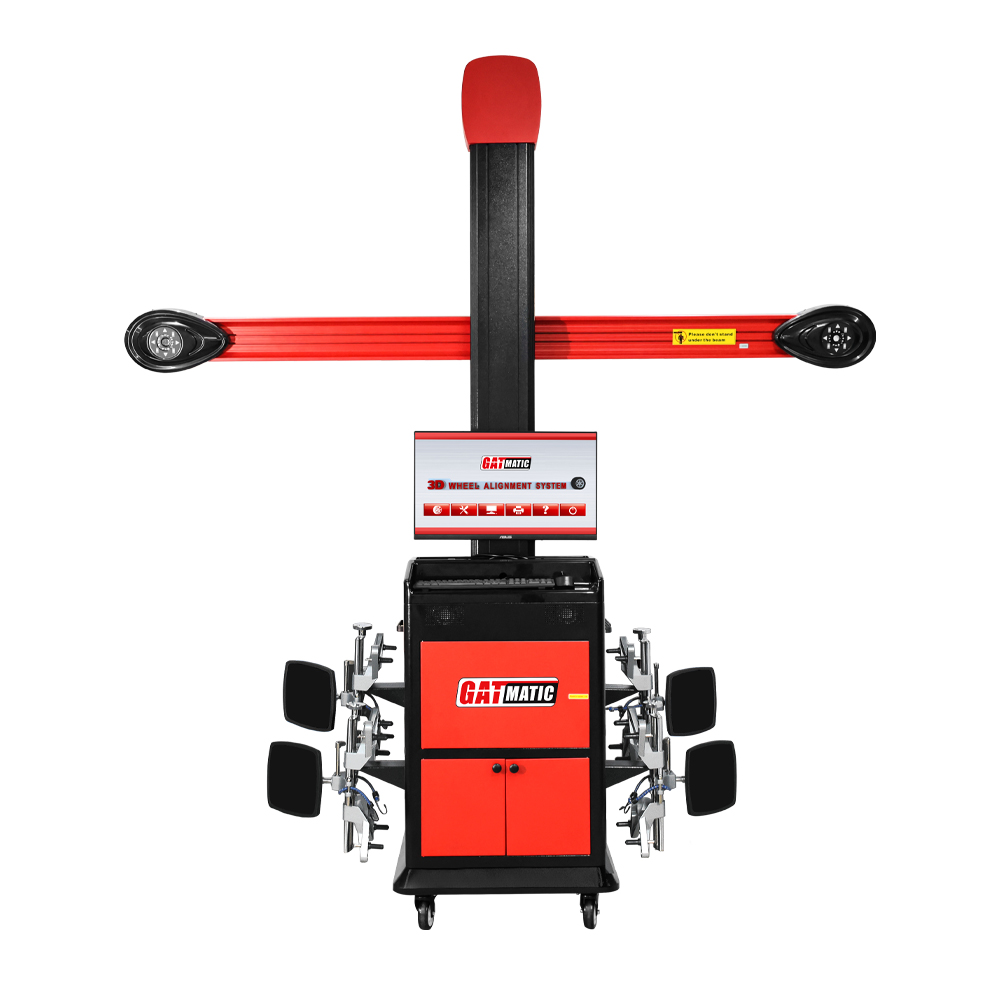
For these workshops, a 3D wheel alignment system is often the most practical choice.
Modern 3D wheel alignment systems use camera-based measurement technology to deliver accurate alignment readings while maintaining relatively simple operation and maintenance.
These systems offer strong performance while remaining accessible for workshops with moderate alignment service demand.
High-Volume Tire Service Centers
Large service centers or dedicated tire shops handle dozens of alignment jobs every day. In such environments, speed and efficiency become critical.
Typical requirements include:
-
Faster vehicle positioning
-
Minimal setup time
-
High measurement accuracy
-
Ability to process multiple vehicles quickly
For these workshops, touchless wheel alignment technology can significantly improve workflow efficiency.
Unlike traditional alignment machines that require clamps or targets to be mounted on the wheels, touchless wheel alignment systems measure alignment angles without direct wheel contact. This can dramatically reduce preparation time and increase throughput.
These systems are particularly suitable for high-volume service operations where efficiency and customer turnaround time are critical.

Key Features to Consider When Choosing a Wheel Alignment System
Selecting the right wheel alignment machine involves evaluating several technical and operational features.
1. Vehicle Database Coverage
A comprehensive alignment database ensures the system supports a wide range of vehicle models.
Important factors include:
-
Global vehicle coverage
-
Regular software updates
-
Compatibility with new vehicle platforms
An extensive alignment database allows workshops to service more vehicles without compatibility issues.
2. Measurement Accuracy
Accurate measurements are essential for maintaining vehicle safety and tire longevity.
Modern alignment systems often use:
-
High-resolution cameras
-
Advanced imaging algorithms
-
Precision calibration procedures
These technologies help deliver reliable alignment results even in busy workshop environments.
3. Operational Efficiency
The time required to complete an alignment service directly impacts workshop productivity.
Systems that improve efficiency may include features such as:
-
Automatic vehicle recognition
-
Fast target positioning
-
Real-time measurement display
-
Guided alignment procedures
Faster workflows allow workshops to increase the number of vehicles serviced per day.
4. Ease of Use
Technicians should be able to operate the alignment system with minimal training.
User-friendly features often include:
-
Intuitive software interface
-
Guided alignment process
-
Automated measurement reports
These features help reduce operator error and improve service consistency.
ROI Comparison of Different Alignment Technologies
From a business perspective, workshops should evaluate how different alignment systems impact profitability.
The following table compares the typical characteristics of common alignment technologies.
| Alignment Type | Investment Level | Service Speed | Accuracy | Typical Application |
|---|---|---|---|---|
| CCD Alignment | Low | Moderate | Good | Budget workshops |
| 3D Alignment | Medium | Fast | Very high | Most professional garages |
| Touchless Alignment | High | Very fast | Extremely high | High-volume tire centers |
In many cases, workshops find that higher-efficiency systems can significantly increase revenue by allowing more alignment services per day.
For example:
If a workshop increases alignment capacity from 6 vehicles per day to 15 vehicles per day, the equipment investment can often be recovered within 12–24 months, depending on local service pricing.
Recommended Wheel Alignment Solutions for Different Workshop Sizes
The following guide summarizes recommended wheel alignment system configurations for different workshop scales.
| Workshop Size | Recommended Alignment Solution | Key Advantages |
|---|---|---|
| Small repair shop | 3D wheel alignment system | Cost-efficient, accurate |
| Medium independent garage | Advanced 3D alignment system | Flexible vehicle coverage |
| High-volume tire center | Touchless alignment system | Fast service workflow |
| Dealership service center | High-precision alignment system | OEM-level accuracy |
Choosing the right wheel alignment machine not only improves service quality but also enhances workshop competitiveness in the increasingly demanding automotive aftermarket.
Conclusion
Wheel alignment services remain one of the most important revenue-generating operations in automotive workshops. However, selecting the right wheel alignment system requires careful consideration of workshop size, service volume, and operational efficiency.
Small workshops may benefit from cost-effective 3D wheel alignment systems, while high-volume service centers can significantly improve productivity through advanced touchless wheel alignment technology.
By aligning equipment capability with workshop requirements, service providers can maximize efficiency, improve customer satisfaction, and achieve long-term return on investment.
Explore Professional Wheel Alignment Solutions
If you are looking for reliable and efficient wheel alignment systems for modern workshops, explore GATmatic’s range of professional automotive wheel service equipment designed for different workshop needs.
FAQ
What is a wheel alignment system?
A wheel alignment system is professional automotive equipment used to measure and adjust the angles of vehicle wheels according to manufacturer specifications. Proper wheel alignment improves vehicle stability, tire lifespan, and driving safety.
What is the difference between 3D and touchless wheel alignment?
A 3D wheel alignment system uses cameras and targets attached to the wheels to measure alignment angles.
A touchless wheel alignment system measures wheel geometry without attaching targets or clamps, allowing faster measurement and higher workshop efficiency.
How much does a wheel alignment machine cost?
The cost of a wheel alignment machine depends on the technology and configuration. Entry-level systems may cost several thousand dollars, while advanced 3D or touchless alignment systems can require a higher investment but provide faster workflow and better long-term return.
Why do workshops invest in professional wheel alignment equipment?
Professional wheel alignment equipment helps workshops provide accurate alignment services, increase service capacity, reduce tire wear issues, and generate additional revenue from alignment maintenance.
Describe Your Needs In Detail!
We will carefully evaluate your needs and give professional solutions.